

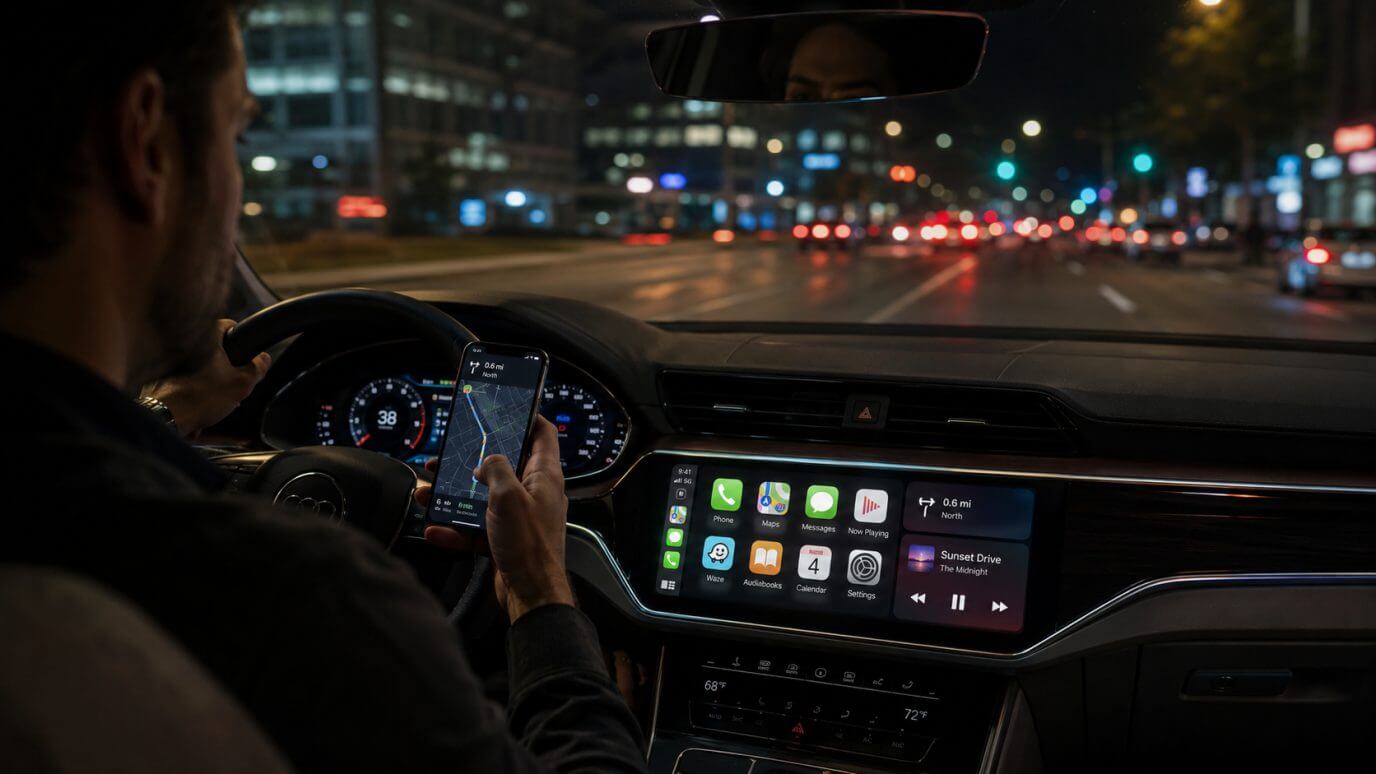

Most mornings, your phone has handled half your day before you've even locked the front door. Traffic on the A-road. A reminder about the 10 o'clock. Something is queued in your podcast app. Then you get in the car, and all of that useful infrastructure suddenly becomes a problem sitting in your cupholder.
For years, people just dealt with it. Quick glance at the map at the lights. Volume turned up by touch while pretending to watch the road. It became normalised in a way that, in retrospect, was pretty alarming.
CarPlay and Android Auto were a genuine fix rather than a workaround. Both systems take the things you actually reach for while driving, directions, messages, music, calls, and translate them into something your car's screen can handle: big buttons, voice controls, nothing that demands more than a second of your attention. Your phone stays in your pocket or bag. The car does the displaying.
What CarPlay actually is
Apple's system launched in 2014 and has quietly ended up in roughly 94% of new vehicles. This is an adoption rate that doesn't get talked about enough given how significant it is. Connect an iPhone via cable, or wirelessly over Bluetooth and Wi-Fi, and the car's touchscreen becomes a simplified extension of it. Siri handles calls and messages. Apple Maps or Waze handles navigation. Spotify, Apple Music, Pocket Casts. It’s all there, all controllable without touching your phone.
The interface is deliberately sparse. That's not a criticism; it's the point. You shouldn't need to think about it.
In 2025, Apple pushed things further with CarPlay Ultra, which goes beyond the infotainment screen and starts integrating with instrument clusters, climate controls, and vehicle diagnostics — in the cars that support it, anyway.

Android Auto
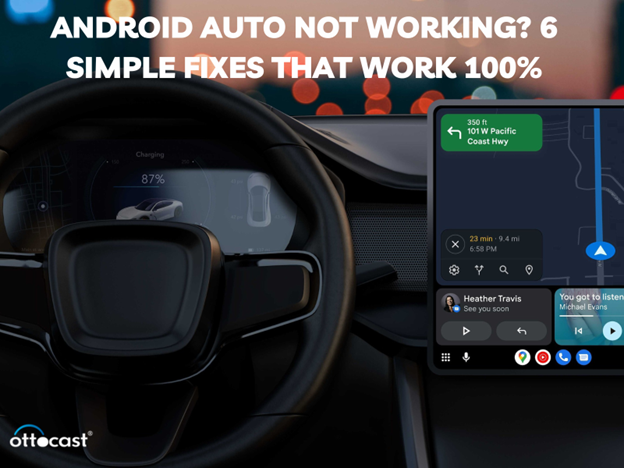
Google's equivalent, first picked up by Hyundai and now standard across most of the industry. The core offering is similar. There is Google Maps, Google Assistant, hands-free everything, all your audio apps. Where it differs is in how much you can adjust the layout. Android Auto gives users more control over how things are arranged on screen, which suits some people and doesn't matter at all to others.
StatCounter had Apple sitting at around 59% of US smartphone share in January 2025, with Android at 41%. Between the two platforms, essentially every driver is covered.
The safety case, which is actually quite strong
Distracted driving kills around 3,500 people in the US every year and injures close to 400,000 more. Phone use is a meaningful chunk of that. CarPlay and Android Auto were built specifically to address it; not as a side benefit, but as the actual purpose.
Research from the University of Utah found measurable safety improvements for drivers using either platform compared to those handling their phones directly. The AAA Foundation confirmed that CarPlay reduces distraction relative to many factory infotainment systems. These weren't marginal results.
AAA also found that both platforms completed calls and navigation input roughly 24–31% faster than manufacturer-built alternatives. Less time fiddling means more time watching the road.
The wired vs. wireless thing matters more than it sounds
A lot of cars, including plenty of reasonably recent ones, only support wired CarPlay or Android Auto. You plug your phone in each time, the cable eventually starts playing up, the USB port gets temperamental, and something that should be seamless starts feeling like a minor daily irritation.
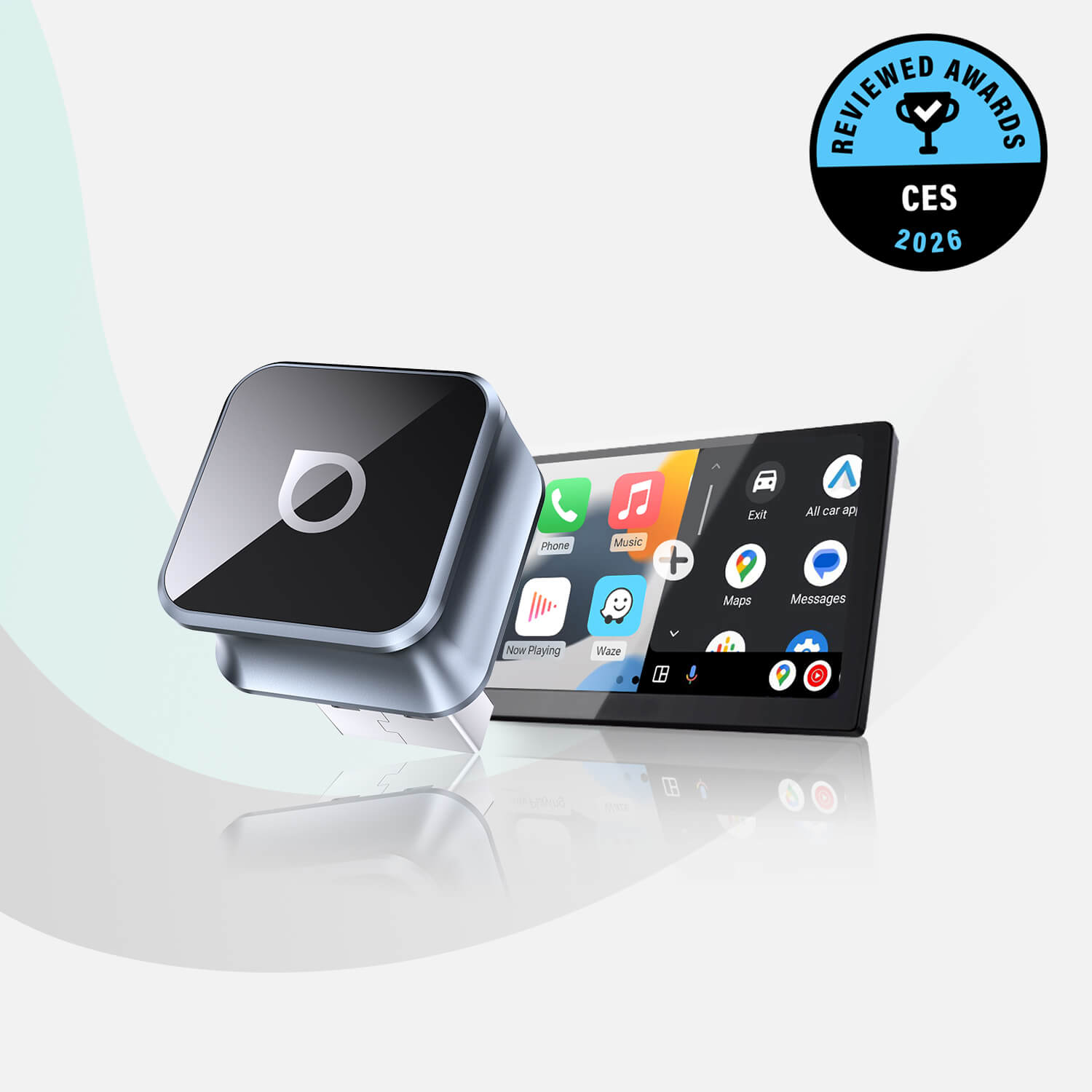
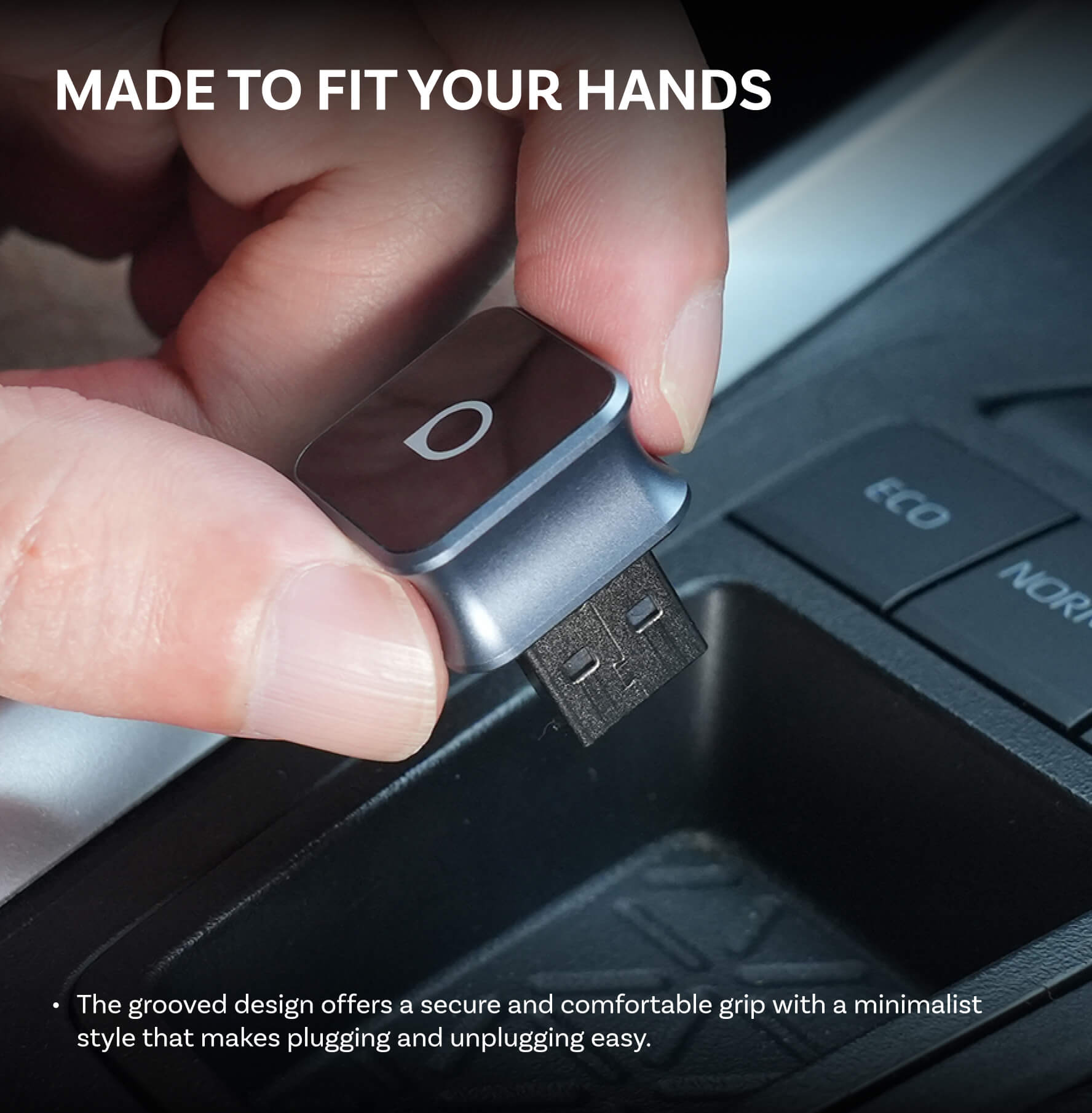
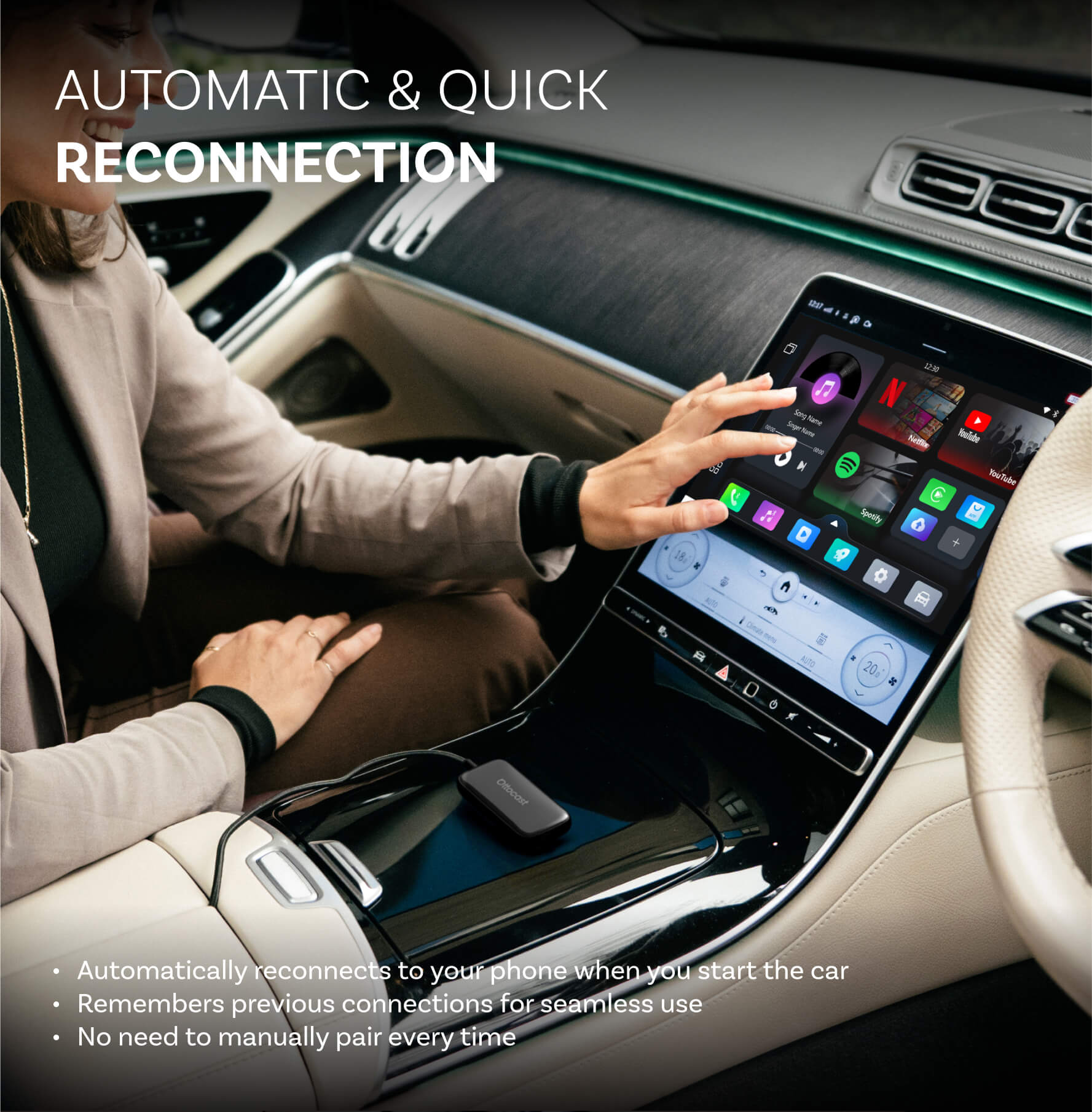
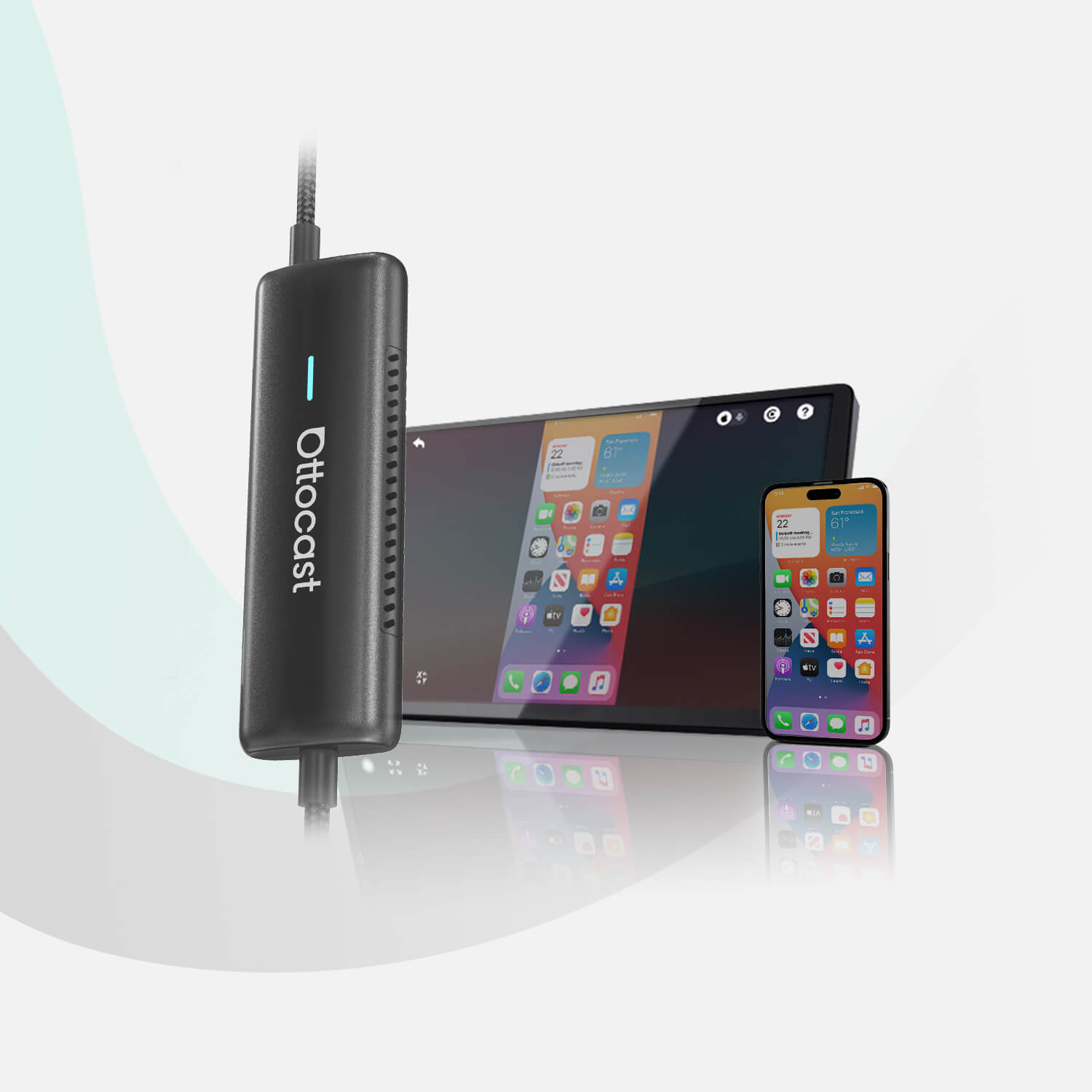
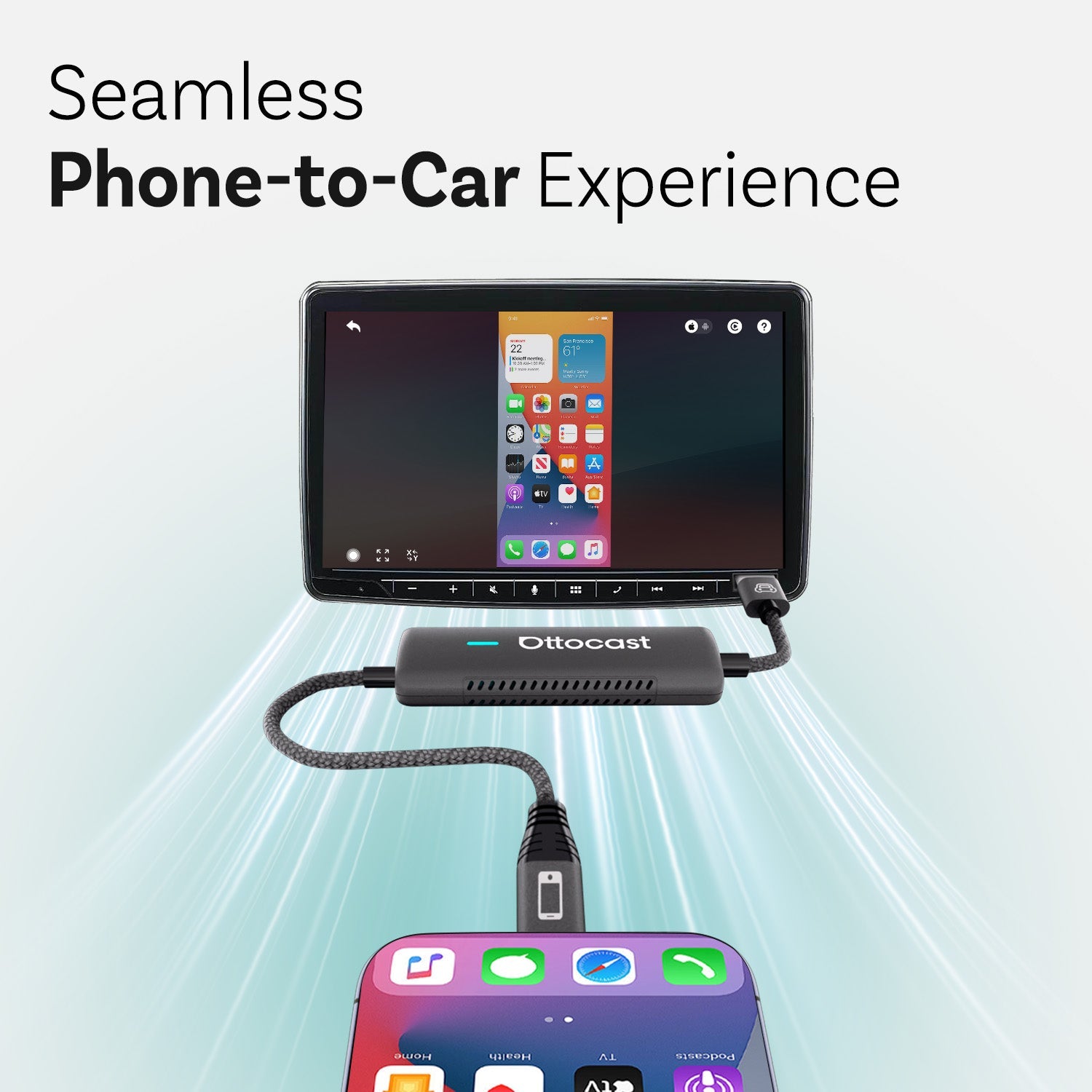
Wireless versions connect automatically when the car starts. No cable, no thought required. If your car has wired support but not wireless, a wireless CarPlay adapter handles the upgrade without any modification.
Ottocast makes a few compact options (the Mini Cube 3.0, Mini Pico, Mini Nova) that plug into your existing USB port and sort it immediately.

What an AI Box adds, if you want more
CarPlay and Android Auto are deliberately curated systems. You get approved apps and nothing else; no YouTube, no Netflix, nothing outside the walled garden.
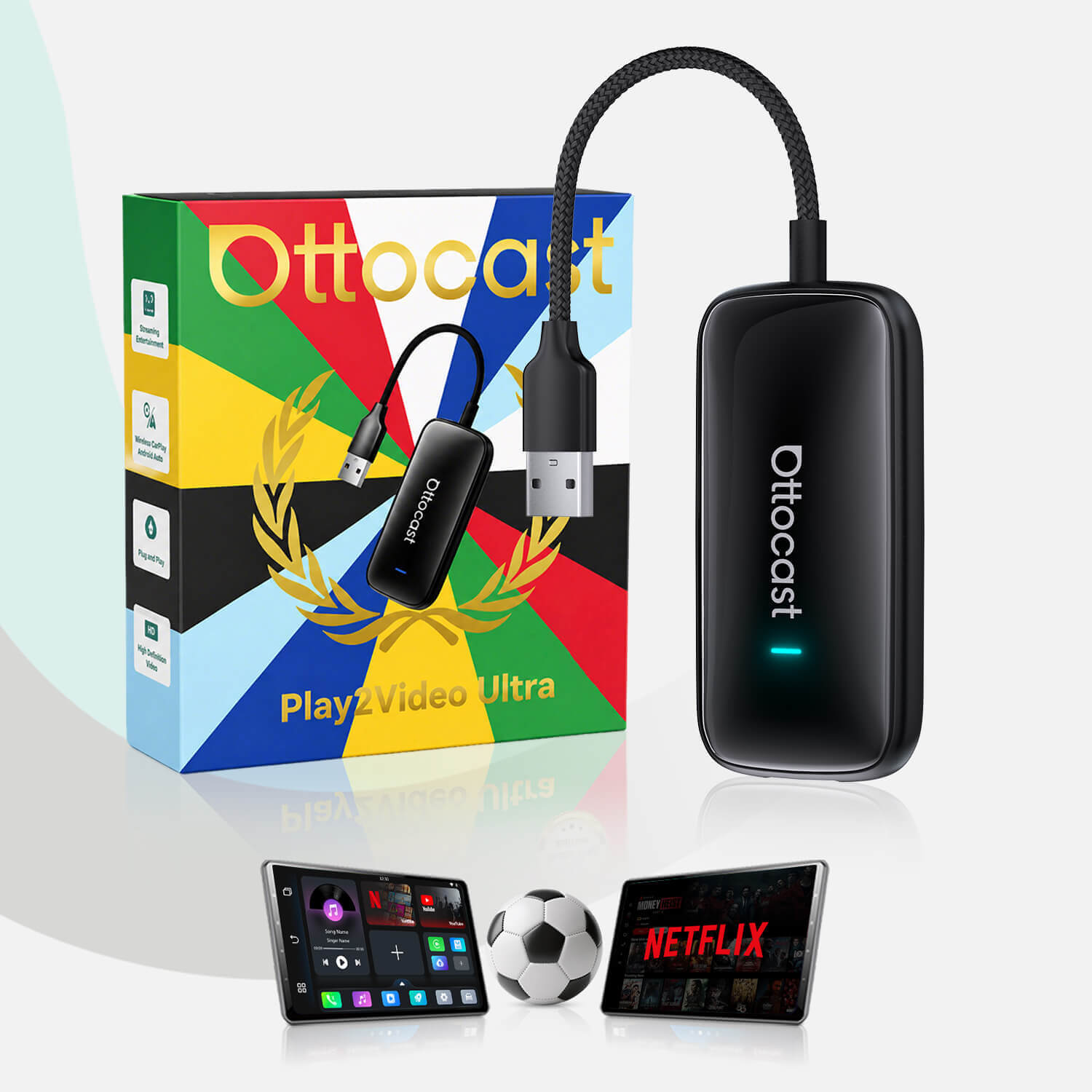
An AI Box for CarPlay can add a full Android OS to your car’s display, opening up access to the entire Play Store. Streaming video, any app you'd use on a tablet, all running through your existing screen. Ottocast's Play2Video series lets you run that alongside your native CarPlay setup; the P3 AI Box is the full version. This is essentially an Android tablet built into the car, with HDMI output and no app restrictions.
Where adoption actually stands
Edison Research's 2024 Infinite Dial study found that 32% of American drivers had CarPlay or Android Auto in their main vehicle, up from 26% the year before. Of that group, 83% used it regularly. That's not a novelty statistic; that's a feature people have integrated into how they drive.
McKinsey found that about a third of global car buyers now list one of the two platforms as a firm requirement. In the US, 38% of petrol car buyers call it a dealbreaker. J.D. Power's APEAL Study, comprising nearly 100,000 new vehicle owners, found both platforms comfortably outperforming manufacturer infotainment on satisfaction scores, with CarPlay edging ahead (840 vs 832 out of 1,000).
It's no longer something you find in higher trims as a selling point. The Hyundai Venue and Kia K4 both offer wireless CarPlay as standard. The expectation has moved.
Quick check: does your car already have it?
If it was made after 2015, probably yes, at least in wired form. Most major manufacturers have had it for years. Look for a USB port on the infotainment system and the CarPlay or Android Auto logo; if they're there, you're set.
Wired but not wireless? An Ottocast adapter closes that gap. Want streaming video or full Android app access? The Play2Video or P3 are the next step up. Worth noting: adapters require your car to already support CarPlay or Android Auto. These upgrade the connection, they don't create it from scratch.
Explore Ottocast’s full range of wireless CarPlay adapters and AI Box upgrades.
The underlying logic here was always straightforward: people were going to use their phones in the car regardless. CarPlay and Android Auto didn't fight that — they just made it considerably less dangerous.
D’fhéadfadh spéis a bheith agat freisin